
In today’s hyper-digital landscape, a business’s online presence is often its first, and sometimes only, impression. Yet, for many small businesses and entrepreneurs, understanding the intricate work behind a professional, high-performing website remains a mystery. You know you need a website, but what exactly does a web developer do for businesses to make that happen and, more importantly, to impact your bottom line?
The confusion often stems from the broad range of skills and tasks involved in website development. Businesses frequently struggle to connect the dots between a well-coded site and tangible results like increased sales, better customer engagement, or improved brand visibility. This gap in understanding can lead to underinvestment in crucial digital assets or, conversely, investing in solutions that don’t truly address core business needs.
This article aims to demystify the essential functions of web developers, detailing the specific tasks and responsibilities they undertake to enhance business operations. We’ll explore how they go beyond mere coding to become strategic partners, crafting digital experiences that drive growth, streamline operations, and solidify your place in the competitive online world. By the end, you’ll not only learn the exact tasks web developers perform but also gain critical insight into why a professional web development team is indispensable for sustainable business success.
What specific tasks and responsibilities do web developers undertake to enhance business operations?
Web developers undertake a wide array of tasks to enhance business operations, including designing and building responsive websites, integrating crucial functionalities like e-commerce and CRM systems, optimizing for search engines, and ensuring site security and performance. Their work directly translates into improved online visibility, streamlined customer experiences, and increased operational efficiency.
What exactly does a web developer do for businesses? I’m a small business owner trying to figure out if I need one.
As a small business owner, a web developer is crucial for establishing and maintaining your digital storefront. They build your website from scratch, ensuring it looks professional, is easy for customers to use, and works flawlessly on all devices. Beyond just aesthetics, they implement features like online booking, e-commerce, or contact forms, connect your site to social media, and ensure it appears high in search results, directly impacting your visibility and sales. They essentially translate your business goals into a functional, engaging, and profitable online presence, freeing you to focus on your core operations.
Understanding the Role of Web Developers
At its core, web development is the art and science of building and maintaining websites. However, for businesses, the role of a web developer extends far beyond just writing code. They are architects of digital experiences, responsible for ensuring a business’s online presence is not only functional and secure but also aesthetically pleasing and highly effective in achieving strategic objectives. This involves a blend of technical expertise, problem-solving acumen, and an understanding of user psychology.
A web developer’s primary responsibility is to translate business requirements into a robust and user-friendly online platform. This often begins with conceptualization and planning, where they collaborate with stakeholders to understand target audiences, desired functionalities, and overall business goals. From there, they embark on the website development process, which includes designing the site’s structure (information architecture), creating compelling visual layouts (user interface design), and ensuring a seamless experience for visitors (user experience design).
Beyond the initial build, web developers are crucial for ongoing maintenance, updates, and performance optimization. They ensure the website remains secure against threats, loads quickly across various devices, and integrates smoothly with other essential business tools like CRM systems, payment gateways, and analytics platforms. Their work often involves elements of software engineering, particularly when developing complex web applications or custom functionalities. Ultimately, a web developer’s contribution directly impacts a business’s ability to attract customers, generate leads, facilitate sales, and manage its digital operations efficiently.
Web Development Services for Small Businesses
Small businesses operate with unique constraints, often requiring cost-effective, scalable, and highly functional online solutions. Web developers specializing in small business needs understand these challenges, offering tailored services that balance affordability with robust features. Their goal is to empower small enterprises to compete effectively online without the need for an in-house IT department.
Affordable Website Design and Development
For small businesses, budget is a significant consideration. Developers offer solutions like template-based designs or custom builds using open-source content management systems (CMS) such as WordPress, Shopify, or Squarespace. These platforms reduce development time and costs while providing powerful functionalities. The focus is on creating a professional, responsive, and mobile-friendly website that serves as a solid foundation for digital growth without breaking the bank.
E-commerce Solutions and Online Stores
If your small business sells products or services, an e-commerce platform is essential. Web developers can integrate secure payment gateways, inventory management systems, and shipping calculators, transforming your website into a fully functional online store. They ensure the shopping experience is intuitive, from browsing products to secure checkout, maximizing conversion rates for your business.
Search Engine Optimization (SEO) Basics
Having a website is only half the battle; people need to find it. Small business web developers often incorporate fundamental SEO practices during development. This includes optimizing site structure, using relevant keywords, ensuring fast loading speeds, and creating SEO-friendly content layouts. While comprehensive SEO is an ongoing process, getting the basics right from the start gives your business a significant advantage in search engine rankings.
Website Maintenance and Support
Websites require ongoing attention to remain secure, performant, and up-to-date. Small business web development services frequently include maintenance packages covering security updates, software patches, content updates, and regular backups. This prevents downtime, protects against cyber threats, and ensures your online presence remains reliable and effective.
Key Skills Required for Web Developers
The field of web development is dynamic, demanding a diverse set of skills that span technical proficiency, creative problem-solving, and continuous learning. Businesses seeking web development talent should look for professionals with a strong foundation in these key areas to ensure a robust and future-proof online presence.
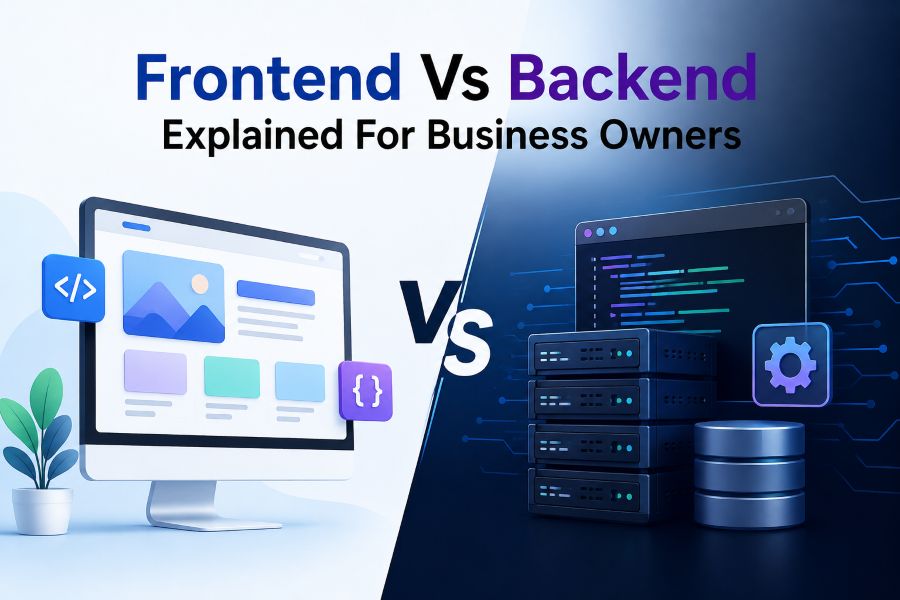
- Programming Languages: Mastery of core web languages is non-negotiable. This includes HTML for structuring content, CSS for styling, and JavaScript for interactivity. Depending on whether they specialize in front-end (what users see), back-end (server, database logic), or full-stack (both) development, developers will also need languages like Python, Ruby, PHP, Java, or C#.
- Frameworks and Libraries: Efficient development often relies on frameworks and libraries that provide pre-written code and structured approaches. For front-end, popular choices include React, Angular, and Vue.js. Back-end developers often use Django (Python), Ruby on Rails (Ruby), or Node.js with Express. These tools significantly speed up development and ensure scalability.
- Database Management: Most dynamic websites require databases to store information. Developers need skills in SQL (for relational databases like MySQL, PostgreSQL) and/or NoSQL (for non-relational databases like MongoDB). They must be able to design, query, and manage databases efficiently.
- Version Control Systems: Collaboration and tracking changes are critical in development. Tools like GitHub for Version Control are standard, allowing developers to manage codebases, collaborate with teams, and revert to previous versions if needed.
- User Interface (UI) and User Experience (UX) Design: While not every web developer is a designer, a strong understanding of UI/UX principles is essential. This ensures the websites they build are not only functional but also intuitive, enjoyable, and accessible for users. Developers might use tools like Adobe XD for Design to understand and implement design mockups effectively.
- Responsive Design: With the proliferation of mobile devices, developers must create websites that adapt seamlessly to various screen sizes. This involves using flexible layouts, images, and media queries to deliver an optimal experience across desktops, tablets, and smartphones.
- Problem-Solving and Debugging: Web development is inherently about solving complex problems. Developers must have strong analytical skills to identify issues, debug code, and find efficient solutions.
- Security Best Practices: Understanding common web vulnerabilities (e.g., cross-site scripting, SQL injection) and implementing secure coding practices is paramount to protect sensitive business and user data.
- Continuous Learning: The web development landscape evolves rapidly. Successful developers commit to lifelong learning, staying updated with new technologies, frameworks, and best practices.
Education often comes from formal computer science degrees, specialized bootcamps, or extensive self-study. Certifications in specific programming languages or cloud platforms can also demonstrate expertise.
Impact of a Professional Web Development Team
Engaging a professional web development team goes beyond simply getting a website; it’s a strategic investment that profoundly impacts various facets of a business. Many businesses make critical mistakes by underestimating the value of professional development, leading to suboptimal online presences that hinder growth rather than fuel it.
One common mistake is opting for DIY website builders without understanding their limitations. While seemingly cost-effective, these platforms often lack customization, scalability, and robust SEO capabilities. A professional team, conversely, builds a site optimized from the ground up, ensuring a strong foundation for digital marketing efforts. They implement advanced SEO techniques, schema markup, and fast loading times, directly enhancing brand visibility and ensuring your business ranks higher in search engine results.
Another crucial impact is on customer engagement. A poorly designed or slow website drives users away. A professional team, equipped with expertise in user interface design and user experience (UX) principles, crafts an intuitive, engaging, and seamless journey for visitors. This translates into longer visit durations, lower bounce rates, and increased conversions, whether it’s through lead generation, product sales, or service inquiries. They understand how subtle design choices and efficient navigation can influence user behavior and trust.
Furthermore, a professional team minimizes technical debt and ensures long-term operational efficiency. They build scalable architectures, making it easier to add new features, integrate third-party tools (like CRM or ERP systems), and adapt to future business needs without extensive overhauls. This foresight protects your investment and prevents costly rebuilds down the line. They also prioritize security, implementing robust measures to protect sensitive business and customer data, thereby safeguarding your brand’s reputation.
For measuring success, tools like Google Analytics for Tracking become invaluable. A professional web development team doesn’t just build; they also set up proper analytics tracking, interpret data, and provide insights. This data-driven approach allows for continuous optimization, identifying areas for improvement in user flow, content effectiveness, and conversion funnels, directly impacting your business growth and profitability.
Success Stories from Businesses Who Partnered with Our Web Developers
Real-world results speak volumes about the transformative power of professional web development. Here, we highlight businesses that leveraged our expertise, guided by The Web Development Impact Framework, to achieve significant online success.
Case Study 1: Local Artisan Bakery Goes Global
The Challenge: “Sweet Delights Bakery” had a charming local presence but no effective online storefront. Their existing basic website was static, couldn’t process orders, and had zero visibility outside their immediate neighborhood. Their pain point was clear: limited reach and untapped market potential.
Our Solution: We applied the first step of our framework, Understanding the Business Needs, to identify their desire for an e-commerce platform with nationwide shipping capabilities. Following Analyzing Market Trends, we noted the rising demand for gourmet food delivery. We then proceeded to Implementing Solutions, building a bespoke Shopify store, optimizing product pages, and integrating secure payment gateways. The “Sweet Delights” website now features a stunning visual design, an intuitive ordering process, and robust backend management. Post-launch, we moved to Measuring Success using Google Analytics to track sales and customer demographics, and continue with Continuous Improvement through A/B testing on product displays and checkout flow.
The Outcome: Within six months, “Sweet Delights” saw a 300% increase in online sales, shipping across 40 states. Their brand visibility exploded, leading to features in national food blogs and a significant boost in local foot traffic due to increased brand recognition.
Case Study 2: Professional Services Firm Streamlines Client Acquisition
The Challenge: “Apex Consulting,” a B2B firm, struggled with an outdated website that failed to convey their expertise or generate quality leads. Prospects found it difficult to navigate, and the site offered no clear call to action or thought leadership content. Their core pain point was a leaky lead funnel due to a poor online representation.
Our Solution: Our team initiated with Understanding the Business Needs, focusing on lead generation and thought leadership. Analyzing Market Trends highlighted the importance of engaging content and clear conversion paths for professional services. During Implementing Solutions, we redesigned their website with a sleek, professional aesthetic using a WordPress CMS, integrated a robust CRM, developed dynamic service pages, and built a dedicated blog section for expert articles. We included clear CTAs for consultations and gated content downloads. Measuring Success involved tracking form submissions and content downloads via Google Analytics, with ongoing Continuous Improvement cycles based on user feedback and conversion rate optimization.
The Outcome: “Apex Consulting” experienced a 150% increase in qualified lead inquiries per month. Their new blog positioned them as industry leaders, significantly enhancing their brand authority and reducing the sales cycle for new clients.
The Web Development Impact Checklist for Success:
When partnering with web developers, consider this checklist to ensure a positive impact:
- Clearly define your business goals and target audience.
- Insist on a mobile-responsive design for all devices.
- Prioritize user experience (UX) for easy navigation.
- Ensure robust security measures are in place.
- Plan for SEO from the outset, not as an afterthought.
- Establish clear metrics for success (e.g., sales, leads, traffic).
- Discuss ongoing maintenance and support plans.
- Ensure scalability to accommodate future growth.
- Demand clear communication throughout the development process.
Conclusion
Understanding “what does a web developer do for businesses” reveals a role far more expansive and impactful than mere coding. Web developers are pivotal in shaping a business’s digital identity, from crafting visually appealing and functional websites to implementing sophisticated e-commerce solutions, ensuring optimal search engine visibility, and maintaining robust online security. Their work directly addresses the core pain point of many businesses: transforming an online presence from a static brochure into a dynamic engine for growth, customer engagement, and profitability.
By effectively managing everything from website development and user interface design to foundational digital marketing elements and aspects of software engineering, a professional web development team becomes an indispensable strategic partner. They translate business objectives into tangible online results, ensuring your digital assets are not just present but performant, scalable, and secure. Embracing professional web development is not an expense; it’s a critical investment in your business’s future success.
Ready to unlock your business’s full online potential? Visit our website for a free consultation on improving your online presence and discover how our expert web development team can help you achieve your goals.
Frequently Asked Questions
Q: Do web developers also create content for my website?
A: While a web developer’s primary role is technical, they often collaborate closely with content creators. Some full-stack developers might assist with content integration, but typically, dedicated copywriters or marketing teams handle content creation.
Q: How long does it take to develop a business website?
A: The timeline varies greatly depending on complexity, features, and content readiness. A basic brochure website might take 4-6 weeks, while a complex e-commerce platform could take 3-6 months or more.
Q: What’s the difference between a front-end and back-end web developer?
A: Front-end developers focus on the visual aspects and user interaction (what you see and click), using HTML, CSS, JavaScript. Back-end developers work on the server, database, and application logic (what happens behind the scenes) using languages like Python, PHP, or Node.js.
Q: Is ongoing website maintenance really necessary for a small business?
A: Yes, absolutely. Ongoing maintenance is crucial for security updates, performance optimization, bug fixes, and ensuring compatibility with new browser versions. Neglecting it can lead to security vulnerabilities, slow load times, and a poor user experience.
Q: Can a web developer help with my website’s ranking on Google?
A: Yes, web developers play a significant role in technical SEO. They ensure your site’s structure, speed, mobile-friendliness, and code are optimized for search engines, which are critical factors for higher rankings. They also set up analytics for tracking.
Q: How much does it cost to hire a web developer for a business?
A: Costs fluctuate based on project scope, developer experience, and location. Small business websites can range from a few thousand dollars to tens of thousands for complex platforms. It’s best to get a detailed quote based on your specific needs.